

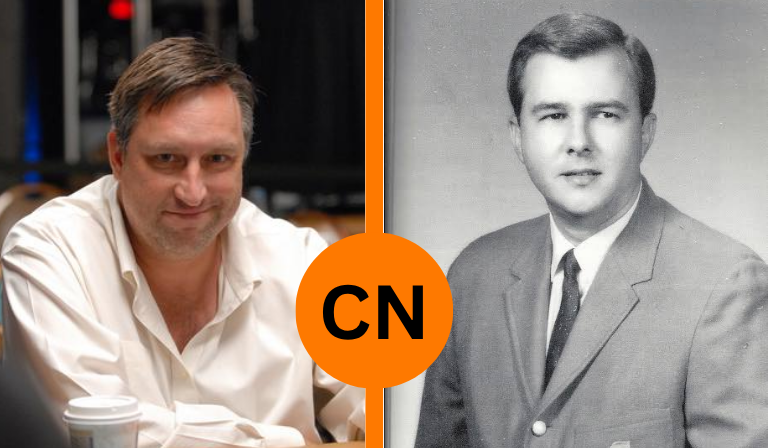
When people search for Bill Elder, they may be surprised to discover that the name belongs to several accomplished figures from very different fields. One became a respected television journalist in New Orleans, another built a celebrated career as a radio personality in Central Georgia, while others made their mark in college athletics, real estate, and comic art.
The best-known broadcasting figures include William Stanley Elder Jr., a longtime WWL-TV newscaster remembered for his fearless investigative reporting, and William “Bill” Hubert Elder III, a popular Georgia radio host whose voice became familiar to generations of listeners. Their careers took different paths, but both left lasting impressions on their communities.
This article explores their backgrounds, careers, major achievements, family lives, public image, and lasting legacies while also looking at the other notable professionals associated with the name.
Quick Facts About Bill Elder
| Category | Details |
|---|---|
| Name | Bill Elder |
| Notable TV Journalist | William Stanley Elder Jr. |
| TV Journalist Birth Date | January 28, 1938 |
| TV Career | WWL-TV, New Orleans |
| TV Retirement | 2000 |
| TV Journalist Death | September 17, 2003 |
| Notable Radio Personality | William “Bill” Hubert Elder III |
| Radio Personality Birth Date | May 21, 1954 |
| Radio Career | Central Georgia broadcasting |
| Famous Radio Association | 99 WAYS |
| Georgia Radio Hall of Fame | Inducted in 2012 |
| Radio Personality Death | February 15, 2026 |
| Other Notable Elder | Will Elder, MAD Magazine artist |
| Athletic Figure | Dr. Bill Elder |
Early Life and Background
The life story of William Stanley Elder Jr. began on January 28, 1938. He would eventually become one of the most recognizable broadcast journalists in New Orleans, building a career that lasted more than three decades.
Elder entered television journalism at a time when local news was becoming an increasingly important part of American broadcasting. His professional style was not built around simply reading prepared reports. Instead, he developed a reputation for asking difficult questions and investigating issues that mattered to the public.
His career became closely connected with WWL-TV, where he spent most of his professional life. Over the years, his name became strongly associated with New Orleans television news.
The second major broadcaster, William “Bill” Hubert Elder III, followed a different route. Born May 21, 1954, he developed an interest in radio from a young age and eventually turned that interest into a decades-long career.
His early experiences with broadcasting helped prepare him for a future as one of Central Georgia’s best-known morning radio personalities.
Bill Elder’s Age and Physical Features
Because multiple public figures share this name, age and physical details depend on which individual is being discussed.
William Stanley Elder Jr. was born in 1938 and died in 2003 at the age of 65. His professional identity is primarily associated with journalism, investigative television reporting, and WWL-TV.
William Hubert Elder III was born in 1954 and died in 2026 at the age of 71. He was best known for his long career in radio in Central Georgia.
Detailed public information about their height, weight, eye color, or other physical characteristics is limited. Those details were not central to either man’s professional reputation, so it is more useful to focus on their careers and contributions.
Career and Major Achievements
A Powerful Career at WWL-TV
William Stanley Elder Jr. joined WWL-TV in 1966 and remained with the station until his retirement in 2000. Over roughly 34 years, he became known for a style of journalism that was direct, determined, and often confrontational when the story required it.
He worked as both an investigative reporter and news anchor. His responsibilities included anchoring the noon and 5 p.m. newscasts while also producing deeper investigative stories.
His approach earned him the nickname the “Mike Wallace of Louisiana.” The comparison reflected his reputation for tough interviews and hard-hitting reporting.
One of the most important aspects of Elder’s career was his willingness to investigate difficult subjects. He did not limit his journalism to routine daily news. His work often focused on problems involving public institutions and issues that could affect ordinary people.
Award-Winning Investigative Journalism
Among the notable projects linked to Elder was his investigation into conditions at Orleans Parish Prison. Another major effort, “Facing Reality,” examined serious problems connected with drug use and sexual misconduct at a treatment facility.
The reporting received significant recognition. His career included multiple Edward R. Murrow Awards, while the “Facing Reality” series received a Peabody Award.
Those achievements helped establish his standing as more than a television personality. He was regarded as a journalist who used investigative reporting to bring attention to important public issues.
A Remarkable Superdome Incident
Another memorable chapter in the journalist’s career occurred in 1979 during a hostage situation at the Louisiana Superdome.
Elder became involved in the tense situation and reportedly spoke directly with the hostage-taker. His communication helped persuade the individual to surrender.
The incident stood out because it showed a different side of a journalist accustomed to working behind a camera. In a dangerous and unpredictable environment, his ability to communicate calmly became an important part of the outcome.
A Long Radio Career in Central Georgia
The other widely remembered broadcaster connected with the name built his reputation in radio rather than television.
William Hubert Elder III began working in broadcasting while still young. He had early opportunities at radio stations in Georgia, including WMAZ, WNEX, WVLD, and WBML.
His biggest breakthrough came with his morning-drive career on WMAZ-FM, which later became known as 99 WAYS. For listeners in the Macon area, his personality-driven program became a familiar part of the morning routine.
He was not simply a disc jockey. His appeal came from his ability to connect with listeners through humor, conversation, entertainment, and local personality.
His long association with the morning show helped make him one of the most recognized radio voices in Central Georgia.
Georgia Radio Hall of Fame
A major milestone in his career came in 2012 when he was inducted into the Georgia Radio Hall of Fame.
The honor recognized years of broadcasting success and his influence on the Georgia radio community. His legacy was also strengthened by the relationships he built with listeners, fellow broadcasters, and younger people entering the industry.
For many fans, his most important achievement was not a single award or rating figure. It was the lasting relationship he created with his audience over many years.
Relationship With Colleagues and Community
Both broadcasters developed strong professional connections throughout their careers.
The New Orleans journalist worked alongside generations of television professionals at WWL-TV and became an established figure within Louisiana media. His investigative approach also earned respect from people who valued serious local journalism.
The Georgia radio host had a similarly strong connection with his community, but through a more informal medium. Morning radio depends heavily on familiarity, personality, and trust, and his long tenure allowed listeners to feel as though they knew him personally.
His influence also extended to younger broadcasters. He was remembered as someone willing to share experience and help others navigate the broadcasting business.
Marriage and Family Life
Public information about the family lives of the different men named Bill Elder is considerably more limited than information about their professional careers.
That is particularly important when discussing people with the same name. Details from one individual’s family history should not automatically be attributed to another.
The Central Georgia radio personality was remembered by his family and community after his death in February 2026. His obituary and memorial coverage emphasized not only his professional achievements but also the relationships he formed outside the studio.
For the WWL-TV journalist, most public records and biographical discussions focus heavily on his professional work, health challenges, and broadcasting career rather than detailed accounts of his private family life.
Social Media Presence
Neither of the historic broadcasters built a career around social media because most of their professional lives took place before platforms such as Facebook, Instagram, and X became central to public communication.
Today, however, their names can appear online through memorial posts, historical videos, fan discussions, archived broadcasts, and tributes.
The Central Georgia broadcaster’s passing in 2026 generated renewed online discussion, with former listeners and members of the local community remembering his career.
The New Orleans journalist is similarly remembered through archival clips and discussions of his work at WWL-TV.
Who Is Bill Elder?
The simplest answer is that Bill Elder is not one single public figure.
The name can refer to several people, including journalists, radio personalities, an athletic administrator, a real estate executive, and an influential comic artist.
That is why searches for the name can produce apparently unrelated results. One person may be looking for a WWL-TV anchor while another may be trying to learn about a Macon radio host.
Understanding the full name and professional field is the easiest way to identify the correct person.
Personality and Interests
The public personalities of the two major broadcasters were also quite different.
The WWL-TV journalist was known for persistence, determination, and a willingness to challenge people in positions of authority. His work reflected the traditions of investigative television journalism, where thorough research and direct questioning were essential.
The Georgia radio personality had a more conversational and entertainment-focused image. His success came from making listeners laugh, keeping them informed and creating a sense of companionship during morning broadcasts.
These differences show how broad the world of broadcasting can be. A successful broadcaster does not have to follow one formula.
Other Notable People Named Elder
Will Elder and MAD Magazine
Will Elder was another important figure whose name can sometimes appear in searches related to Bill Elder.
Born Wolf William Eisenberg in 1921, he became an influential illustrator and cartoonist. He worked with Harvey Kurtzman and played an important role in the early development of MAD magazine.
Elder became famous for densely detailed drawings filled with small visual jokes and satirical elements. His style was sometimes described as “chicken fat” because of the layers of humorous detail packed into his illustrations.
His work helped shape the look and tone of American satire and influenced later generations of cartoonists.
Dr. Bill Elder in College Athletics
Another notable figure was Dr. Bill Elder, who built a long career in basketball coaching and athletic administration.
He coached at several colleges and eventually became involved in athletic leadership. His combined coaching record was reported as 549 wins and 288 losses.
He also became the first full-time athletic director at Auburn University at Montgomery and earned recognition through several halls of fame.
His career demonstrates that the Elder name extends well beyond broadcasting.
William Elder in Real Estate
William Elder is also associated with the modern real estate industry through RXR Real Estate, where he has held executive leadership responsibilities connected to the company’s New York City operations.
This is another example of why context matters when searching the name.
Does Bill Elder Have Children?
There is no single answer because the question can refer to different people named Bill Elder.
Public biographies of the broadcasters do not provide enough consistent information to make broad claims about children or family relationships without risking confusion between individuals.
For accurate biographical research, it is better to identify the specific Bill Elder first and then examine reliable information about that individual’s family.
Net Worth and Income
Reliable public figures for the personal net worth of the different men named Bill Elder are not readily established.
It would be misleading to attach an estimated net worth to the name simply because websites sometimes publish unsupported figures. Earnings in broadcasting also changed considerably depending on the station, market, experience, contract, and time period.
The New Orleans journalist’s income would have been shaped by a long television career, while the Georgia radio personality’s earnings would have reflected decades of radio work, hosting responsibilities, ratings, and market conditions.
Because there is no dependable public financial record establishing exact totals, a specific net worth figure should be treated with caution.
Public Image and Legacy
The legacy of Bill Elder is especially interesting because it exists in several different forms.
The WWL-TV journalist is remembered for investigative reporting, fearless questioning, and a commitment to serious local journalism. His work demonstrated how television reporters could move beyond daily headlines and investigate deeper issues.
The Central Georgia radio broadcaster left a different kind of legacy. His strength was his relationship with listeners. After decades on the air, his voice became part of the everyday rhythm of life for many people in the Macon area.
The two careers may seem very different, but they share an important quality: both men built trust with audiences over time.
That may be the strongest explanation for why the name continues to generate interest years after their careers ended.
Why Bill Elder Still Matters
The history of American broadcasting is filled with personalities who influenced their communities without necessarily becoming nationally famous.
Bill Elder represents that tradition. Whether through investigative television reporting in Louisiana or morning radio in Georgia, these broadcasters became important because their audiences knew them, heard them regularly, and relied on their voices.
Their careers also show how local media can have a lasting cultural impact. A major national celebrity may attract millions of viewers, but a local broadcaster can become part of a community’s identity in an equally meaningful way.
Conclusion
The story behind Bill Elder is larger and more diverse than one biography.
William Stanley Elder Jr. built a distinguished career at WWL-TV, where his aggressive investigative reporting earned awards and a reputation as one of Louisiana’s most memorable broadcasters. William Hubert Elder III created his own legacy in Central Georgia through decades of morning radio and was later honored by the Georgia Radio Hall of Fame.
Beyond those two broadcasters, the name is associated with people in college athletics, real estate, and comic art. That variety explains both the popularity of the name and the confusion it can create in online searches.
Ultimately, the different careers connected to Bill Elder share a common theme: meaningful work, long professional journeys, and a lasting connection with the people who followed them.
FAQs About Bill Elder
1. Who was Bill Elder?
Bill Elder can refer to several notable Americans. The two best-known broadcasters include William Stanley Elder Jr., a longtime WWL-TV journalist in New Orleans, and William Hubert Elder III, a Central Georgia radio personality.
2. What was Bill Elder known for at WWL-TV?
William Stanley Elder Jr. was known for investigative journalism, television anchoring, and hard-hitting reports. He spent approximately 34 years with WWL-TV and became known as the “Mike Wallace of Louisiana.”
3. When did the WWL-TV Bill Elder die?
William Stanley Elder Jr. died on September 17, 2003, at the age of 65.
4. Who was the Georgia radio personality Bill Elder?
William Hubert Elder III was a longtime radio host and disc jockey from Central Georgia. He became especially well known for his morning program associated with 99 WAYS.
5. When did the Georgia Bill Elder die?
William Hubert Elder III died on February 15, 2026, at the age of 71.
6. Was Bill Elder in the Georgia Radio Hall of Fame?
Yes. William Hubert Elder III was inducted into the Georgia Radio Hall of Fame in 2012 in recognition of his broadcasting career and influence.
7. Was Will Elder the same person as Bill Elder?
No. Will Elder was an influential artist and illustrator associated with MAD magazine. Although the names can appear in similar searches, he was a different person.
8. What is Bill Elder’s net worth?
There is no reliable, universally accepted public figure for the net worth of the different people named Bill Elder. Claims about exact amounts should therefore be viewed cautiously.