

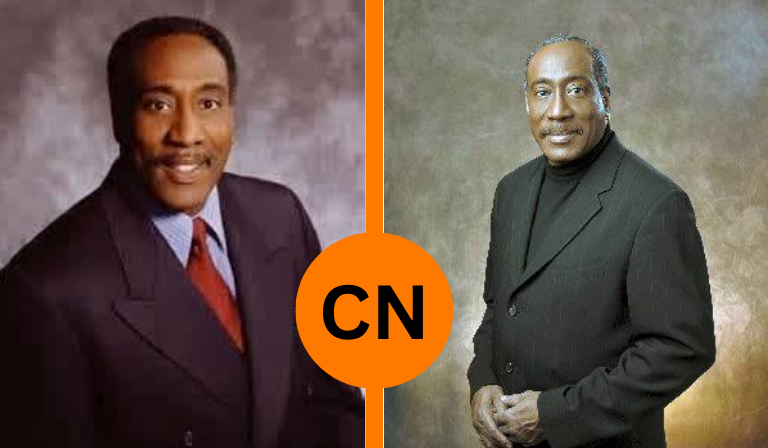
Harold Dow was one of the most respected African-American journalists in American television news. During a career that stretched from local broadcasting to nearly four decades at CBS News, he covered major national and international stories, interviewed some of the most talked-about people of his era, and became an important part of the long-running 48 Hours newsmagazine. His work combined investigative reporting with a calm but powerful interviewing style that allowed him to connect with people from very different backgrounds.
From his groundbreaking beginnings in Omaha to his nationally recognized reporting for CBS, Dow repeatedly broke barriers and earned the trust of viewers. He interviewed kidnapping victim Patty Hearst, conducted the first network interview with O.J. Simpson following the murders of Nicole Brown Simpson and Ron Goldman, and reported on major events including the Pan Am Flight 103 disaster and the September 11 attacks. Along the way, he collected five Emmy Awards and several other major journalism honors.
Quick Facts About Harold Dow
| Fact | Details |
|---|---|
| Full name | Harold Dow |
| Born | September 28, 1947 |
| Birthplace | Hackensack, New Jersey |
| Profession | Journalist, television correspondent, investigative reporter |
| Education | University of Nebraska at Omaha |
| Major employer | CBS News |
| CBS career | Joined CBS News in 1972 |
| Best known for | 48 Hours and investigative reporting |
| Major interviews | Patty Hearst, O.J. Simpson, Mike Tyson |
| Major awards | Five Emmy Awards, Peabody Award, Robert F. Kennedy Award, Edward R. Murrow Award |
| Died | August 21, 2010 |
| Age at death | 62 |
| Family | Wife Kathleen/Kathy and three children |
CBS News records show that Dow was born in Hackensack, New Jersey, attended the University of Nebraska at Omaha, and began his CBS career in 1972. He later became one of the network’s most recognizable correspondents.
Early Life and Background
Harold Dow entered journalism during a period when American television news was changing rapidly. His early career took shape in an industry where African-American reporters were still fighting for equal opportunities and visibility.
Before joining CBS News, Dow worked in radio and television. His early positions included news work at WPAT Radio in Paterson, New Jersey, freelance reporting for KCOP-TV in Los Angeles, and work as an anchor-reporter at Theta Cable TV in Santa Monica. He also worked at KETV in Omaha, where he became the first African-American television reporter in Nebraska.
His time in Omaha was not easy. According to CBS colleague Peter Van Sant, Dow faced racial hostility and death threats. His news director even accompanied him to his car while carrying a gun because of concerns for his safety. Rather than being intimidated into leaving the profession, Dow continued building his career.
That experience became an important part of his legacy. Dow was not simply a successful journalist; he was also a pioneer who entered television news when the industry offered far fewer opportunities to Black reporters.
Harold Dow’s CBS News Career
Harold Dow joined CBS News in 1972 as a broadcast associate. He later moved into reporting and became part of the CBS News Los Angeles bureau, where he worked as a reporter from 1973 to 1977 and as a correspondent from 1977 to 1982.
In 1982, Dow moved into a more prominent role at the network when he was named a co-anchor and interviewer on CBS News Nightwatch. He remained with the overnight program until the end of 1983. Afterward, his assignments continued to expand, allowing him to report for programs including the CBS Evening News, CBS News Sunday Morning, and Verdict.
His reporting covered a wide range of subjects. Although crime and law-enforcement stories became a major part of his reputation, he also reported on social issues, international affairs, politics, war, and human-interest stories.
This versatility helped make Dow valuable to CBS. He could move from an investigative crime report to a major international assignment without losing the personal style that defined his work.
The Biggest Breakthrough: Patty Hearst Interview
One of the defining moments in Harold Dow’s career came in December 1976 when he secured an exclusive interview with Patricia “Patty” Hearst.
Hearst had been kidnapped by the Symbionese Liberation Army and became one of the most closely followed figures in American news. Her case generated enormous public attention, making access to her highly valuable to television networks.
Dow’s exclusive interview became a major accomplishment early in his national reporting career. CBS later identified the Hearst interview as one of the most important exclusives of his career.
The interview demonstrated something that would become characteristic of Dow’s work: the ability to gain access to people at the center of complicated and emotionally charged stories.
Harold Dow and O.J. Simpson
Another major career moment involved O.J. Simpson.
Following the 1994 murders of Nicole Brown Simpson and Ron Goldman, public interest in Simpson became enormous. CBS records state that Dow conducted the first network interview with Simpson following the killings.
The interview became one of Dow’s best-known television moments. His ability to secure access to Simpson reflected both his reputation and his skill as an interviewer.
CBS’s archives continue to feature Dow’s Simpson interview, including footage of a 1996 conversation between the two.
His Role in Creating 48 Hours
For many viewers, Harold Dow is most closely associated with 48 Hours.
His connection with the program began before the regular series even existed. Dow was a contributing correspondent on the 1986 documentary 48 Hours on Crack Street. CBS described that documentary as the project that led to the creation of the weekly 48 Hours newsmagazine. The regular series premiered in January 1988.
Dow contributed to 48 Hours from its premiere and was officially named a correspondent in 1990. He remained closely connected with the program for more than two decades.
His stories explored subjects ranging from crime and law enforcement to homelessness, AIDS, animal rights, divorce, and other social issues. His work demonstrated that investigative television did not have to rely only on sensationalism. Strong reporting, compelling interviews, and human stories could work together.
CBS still describes 48 Hours as a program centered on detailed reporting, evidence, investigations, and interviews, making Dow’s contribution to its early development particularly significant.
Major Career Achievements and Awards
Harold Dow’s work received extensive recognition throughout his career.
He won five Emmy Awards, including an Emmy connected to his 1996 reporting on the American military move into Bosnia and another for distinguished reporting on the Pan Am Flight 103 disaster in 1989.
His honors went beyond the Emmys. Dow received a George Foster Peabody Award for a 48 Hours report about runaways and a Robert F. Kennedy Award for reporting on public housing.
He also received an Edward R. Murrow Award from the Radio-Television News Directors Association and an Operation PUSH Excellence in Journalism Award. His work was additionally recognized by the National Association of Black Journalists.
These awards highlight the range of Dow’s journalism. He could report on major international events while also telling stories about people facing difficult circumstances at home.
Other Notable Stories
Although the Patty Hearst and O.J. Simpson interviews are often remembered most, Harold Dow handled many other major assignments.
He reported on the return of American prisoners of war from Vietnam and later covered events in South Africa following Nelson Mandela’s release. His work also included coverage of the Pan Am Flight 103 disaster and the movement of U.S. forces into Bosnia.
Dow also interviewed professional boxer Mike Tyson for a 48 Hours report examining the highs and lows of public figures attempting comebacks. CBS colleagues remembered him as a reporter who could speak with almost anyone, from politicians and celebrities to people involved in crime stories.
Harold Dow and September 11
The September 11, 2001, terrorist attacks became one of the most dramatic assignments of Dow’s career.
Dow was among the journalists covering events at the World Trade Center during the attacks and survived the collapse of the towers. CBS’s retrospective coverage identifies his September 11 reporting among the major events he covered during his long career.
For any journalist, reporting from the scene of such an unprecedented disaster would have been extraordinarily difficult. For Dow, it became another chapter in a career defined by being present for major moments in history.
Age and Physical Appearance
Harold Dow was born on September 28, 1947, and died on August 21, 2010, at the age of 62.
Detailed public records about his height, weight, or other physical measurements are not reliably documented in the primary biographical sources. What viewers often remembered, however, was his distinctive broadcast presence. CBS colleague Peter Van Sant described Dow as having a powerful baritone voice that could command attention during a news conference while also helping put interview subjects at ease.
His voice, humor, energy, and recognizable television personality became an important part of his professional identity.
Marriage and Family Life
Outside the newsroom, Dow maintained a family life that was largely separate from his public career.
CBS reported that he was married to Kathy, also identified in earlier CBS material as Kathleen, and that they had three children: Joelle, Danica, and David.
Colleagues remembered that Dow cared deeply about his family. Peter Van Sant wrote that Dow had a strong passion for family and life, alongside his dedication to journalism.
Social Media Presence
Harold Dow worked during an era when television journalism was built around network broadcasts, newspapers, radio, and later online news rather than personal social-media platforms.
Because he died in 2010, before social media became a central part of a journalist’s professional brand, there is no reliable evidence of an active personal social-media presence that can be treated as official today.
Archived CBS material and historical reporting remain more useful sources for understanding his work and legacy than unofficial social-media pages.
Personality and Interests
Those who worked with Harold Dow often remembered his personality as much as his journalism.
CBS colleagues described him as funny, curious, energetic, insightful, and deeply interested in people. Peter Van Sant recalled that Dow could communicate with an extraordinary range of individuals, including presidents, celebrities, accused criminals, and people struggling with addiction.
His curiosity appears to have been central to his reporting style. He was happiest when pursuing a story, and colleagues remembered his commitment to getting the details right.
That combination of curiosity and empathy was particularly useful for long-form television. Dow could investigate a difficult subject without losing sight of the people involved.
Net Worth and Income
There is no reliably documented public figure for Harold Dow’s net worth. Although he spent decades at a major American television network and received numerous awards, CBS’s biographical material does not provide an official estimate of his personal wealth or annual income.
Online estimates that provide a specific dollar amount should therefore be treated cautiously unless they are supported by credible financial records.
What can be established is that Dow built a long and distinguished career at CBS News, progressing from broadcast associate to correspondent and becoming a major contributor to 48 Hours.
His Final Years and Death
In the final period of his career, Dow remained connected to 48 Hours. CBS reported that he had recently retired but was still expected to contribute to the program during the upcoming season.
He died suddenly on August 21, 2010, at age 62. His family said he had been suffering from adult-onset asthma, and authorities believed that he died from an asthma attack while behind the wheel of his car.
His death shocked colleagues throughout CBS News.
Harold Dow’s Last Story
One of the most poignant parts of his legacy was a story he was still completing when he died.
Dow had spent more than a year working on a 48 Hours investigation into serial killer Rodney Alcala. The program aired the finished report, titled “The Killing Game,” as a tribute to him in September 2010.
The broadcast featured interviews with investigators, people who had encountered Alcala, and family members of victims. Dow’s dedication to completing the complicated investigation became a fitting final example of his commitment to journalism.
Public Image and Legacy
Harold Dow’s public image was built around credibility, courage, humor, and accessibility.
He was respected not only because of the awards he won but because of the way he approached journalism. CBS colleagues repeatedly emphasized his ability to connect with people and his willingness to pursue difficult stories.
His legacy is also important from a diversity perspective. By becoming the first African-American television reporter in Nebraska, Dow broke a significant professional barrier. He later became a senior network correspondent whose work was seen by millions of viewers.
His career showed that representation in television news could extend beyond simply being present. Dow earned opportunities through reporting skill, persistence, and the ability to handle some of the most demanding stories in broadcast journalism.
Conclusion
Harold Dow left behind a remarkable record of journalism. From facing racial barriers in Omaha to becoming a five-time Emmy Award-winning CBS News correspondent, his career reflected determination and a genuine commitment to storytelling.
His exclusive Patty Hearst interview, first network interview with O.J. Simpson, award-winning investigations, work on 48 Hours, international reporting, and coverage of September 11 all contributed to his reputation as a major television journalist.
But the lasting significance of Harold Dow goes beyond a list of awards and famous interviews. He opened doors for African-American journalists, built trust with difficult interview subjects, and demonstrated how investigative reporting could combine serious journalism with humanity.
For viewers who remember him and for journalists who study the history of American television news, Dow remains an important figure whose career continues to represent courage, curiosity, and professional excellence.
FAQs About Harold Dow
1. Who was Harold Dow?
Harold Dow was an American television journalist and longtime CBS News correspondent best known for investigative reporting and his work with 48 Hours. He spent nearly four decades associated with CBS News.
2. What was Harold Dow best known for?
He was especially known for his work on 48 Hours, his exclusive interview with Patty Hearst, and his first network interview with O.J. Simpson after the 1994 murders.
3. How many Emmy Awards did Harold Dow win?
Harold Dow won five Emmy Awards during his journalism career. His honors also included a Peabody Award, Robert F. Kennedy Award, and Edward R. Murrow Award.
4. When did Harold Dow join CBS News?
Dow joined CBS News in 1972 as a broadcast associate before moving into reporting and eventually becoming a network correspondent.
5. Was Harold Dow part of 48 Hours?
Yes. Dow contributed to 48 Hours from its 1988 premiere and became a correspondent in 1990. He had previously worked on the 1986 documentary 48 Hours on Crack Street, which helped lead to the creation of the series.
6. What happened to Harold Dow?
Harold Dow died suddenly on August 21, 2010, at the age of 62. His family said he had been suffering from adult-onset asthma, and an asthma attack was believed to have caused his death.
7. Did Harold Dow have a family?
Yes. CBS reported that Dow was married to Kathy and had three children, Joelle, Danica, and David.
8. What is Harold Dow’s legacy?
His legacy includes breaking racial barriers in television journalism, producing award-winning investigations, securing major interviews, contributing to the development of 48 Hours, and inspiring other African-American journalists.