

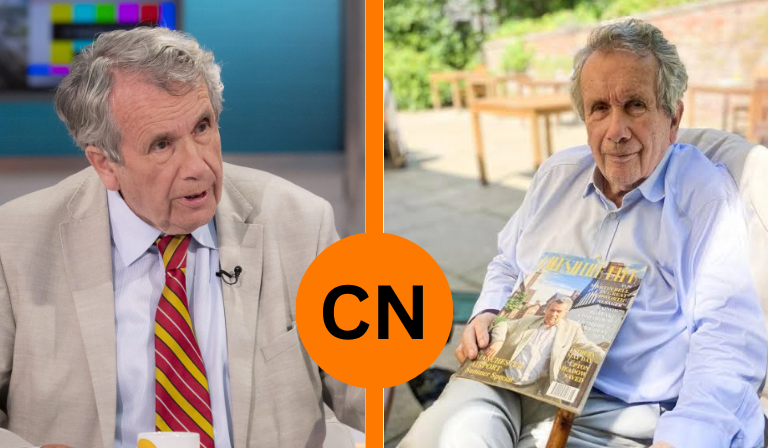
Martin Bell is one of the most recognizable names in British television journalism. Known for his courage, distinctive white suits, and reporting from some of the world’s most dangerous conflict zones, he built a career that stretched far beyond ordinary newsroom reporting. For decades, he worked as a BBC foreign correspondent and became particularly respected for bringing the human reality of war to television audiences.
His career was not limited to journalism. After leaving the BBC, Martin Bell entered British politics as an independent candidate and achieved a historic victory in the 1997 General Election. He later became involved in humanitarian work, including his role as a UNICEF ambassador.
From war reporting to Westminster, his life has been marked by remarkable professional changes. This article explores his early life, journalism career, political achievements, personal life, public image, and lasting legacy.
Quick Facts About Martin Bell
| Fact | Details |
|---|---|
| Full Name | Martin Bell |
| Date of Birth | 31 August 1938 |
| Birthplace | Redhill, Surrey, England |
| Nationality | British |
| Profession | Former BBC journalist, war correspondent, politician |
| Known For | BBC foreign reporting and independent political career |
| Famous Nickname | The Man in the White Suit |
| Political Status | Former Independent MP |
| Constituency | Tatton |
| Parliamentary Term | 1997–2001 |
| Major Idea | Journalism of attachment |
| Other Work | UNICEF ambassador |
| Honor | OBE |
Introduction
For many viewers, Martin Bell represented a different kind of television journalist. He was not simply a reporter standing in front of a camera and describing events. His reports often placed the audience close to the people experiencing war, political violence, and humanitarian suffering.
During a BBC career lasting more than three decades, he covered conflicts and political crises across the globe. He reported from countries including Vietnam, Angola, parts of the Middle East, Northern Ireland, and Bosnia. His willingness to work in dangerous environments earned him respect among viewers and fellow journalists alike.
Bell later surprised Britain by leaving journalism and entering politics. His election as an independent MP for Tatton in 1997 became one of the most memorable political upsets of the era. His story therefore extends from international journalism to British politics and humanitarian advocacy.
Early Life and Background
Martin Bell was born on 31 August 1938 in Redhill, Surrey, England. He grew up in Britain during a period when the country was experiencing enormous social and political change.
He attended Westminster School and later studied English at King’s College, Cambridge. His education gave him a strong foundation in communication, writing, and critical thinking, skills that would prove valuable throughout his career.
Bell joined the BBC in 1957, beginning what would become a long and distinguished professional relationship with the organization. At a time when television journalism was becoming increasingly influential, he developed an international perspective that eventually took him to some of the most difficult assignments in the world.
His Age and Physical Features
Born in 1938, Martin Bell is 88 years old in 2026. Much of his public identity, however, was established during his active years as a journalist and politician.
Bell became especially recognizable because of his personal style. His preference for wearing white suits while reporting gave him an appearance that audiences could identify almost instantly.
The clothing was more than a fashion choice in the eyes of the public. Over time, it became closely associated with his professional image, leading to the famous nickname “the man in the white suit.”
His appearance helped make him memorable, but it was his calm delivery, experience, and distinctive reporting voice that ultimately established his reputation.
Career and Major Achievements
Martin Bell’s journalism career is the most important chapter of his professional life. During more than three decades with the BBC, he worked as a foreign correspondent and reported from approximately 80 countries while covering 11 conflicts.
His assignments included Vietnam, the Middle East, Angola, Northern Ireland, and the Balkans. These were not easy reporting environments. Bell frequently worked in areas affected by armed conflict, political instability, and humanitarian crises.
One of the defining moments of his career came during the Bosnian War in 1992. While covering the conflict, he was seriously injured by shrapnel. The incident highlighted the physical dangers journalists could face when working close to active fighting.
Despite these risks, Bell became known for reporting with a strong focus on ordinary people caught up in conflict. His stories often explored the consequences of violence rather than concentrating exclusively on political leaders or military strategy.
Another major contribution was his argument for what he called “journalism of attachment.” Bell believed journalists should not ignore the moral dimension of events simply because they were reporting for the public. He argued that witnessing suffering could create a responsibility to explain its human significance.
This approach generated debate within journalism because traditional reporting often emphasized detachment and neutrality. Bell’s philosophy suggested that accuracy and professional standards could coexist with an awareness of right and wrong.
His career therefore influenced not only television audiences but also wider conversations about the role of journalists during war and humanitarian crises.
His Historic Move Into Politics
After many years at the BBC, Martin Bell made a dramatic career change in 1997. He left broadcasting and decided to stand for Parliament as an independent candidate.
He chose the constituency of Tatton, where Conservative MP Neil Hamilton was facing intense public criticism in connection with the cash-for-questions controversy.
Bell presented himself as an independent alternative to the established political parties. His campaign gained considerable momentum, and both Labour and the Liberal Democrats stood aside in the constituency, allowing him to become the main challenger to Hamilton.
The result was historic. Bell won the seat with a majority of around 11,000 votes and became the first independent MP elected to the British Parliament since 1951.
His victory was widely viewed as a striking example of how a well-known public figure could challenge an established political candidate outside the traditional party system.
His Time as an Independent MP
Bell entered the House of Commons with a clear promise: he would serve only one parliamentary term.
During his years in Westminster, he remained associated with issues including political integrity, international affairs, and public standards. His presence in Parliament was unusual because he did not build his career around a major political party.
At the 2001 General Election, Bell kept his promise and did not seek another term in Tatton. He later attempted to return to Parliament by standing in Brentwood and Ongar, but he was unsuccessful.
Although his political career was relatively brief, his 1997 election remained an important part of his public legacy.
Relationship With Journalism
Even after leaving the BBC, journalism remained central to Bell’s identity. His political experience did not erase his reputation as a foreign correspondent; instead, it added another dimension to a career already defined by international reporting.
His views on journalism continued to attract attention, particularly his belief that journalists reporting on human suffering should recognize the moral consequences of what they witness.
Bell’s career is therefore often discussed as an example of the tension between traditional journalistic objectivity and a more openly humanitarian approach to reporting.
Marriage and Family Life
Martin Bell has generally kept many details of his private life away from the spotlight. Unlike his professional career, which was regularly featured in newspapers and television coverage, his family life has not been the main focus of public attention.
He was married to Lucy Smith, and the couple have children. Bell’s preference for maintaining a degree of privacy means that comparatively less information is available about his day-to-day family life than about his journalism and political career.
This separation between public work and private life has helped him maintain a reputation centered primarily on his professional achievements.
Social Media Presence
Martin Bell belongs to a generation of journalists whose careers were established long before social media became part of everyday communication.
As a result, he has not developed the kind of highly visible personal social media presence associated with many modern journalists and public figures. Much of the information available about his work comes from biographies, archival broadcasts, interviews, newspapers, and historical political coverage.
His public profile has therefore largely been shaped by his reporting and public appearances rather than by personal posts or influencer-style online activity.
Who Is Martin Bell?
Martin Bell is a British former BBC foreign correspondent, independent politician, and humanitarian advocate. He became famous for reporting from war zones and international crises and was widely recognized for his trademark white suits.
He is also notable for his political career. In 1997, he defeated sitting Conservative MP Neil Hamilton in Tatton and entered the House of Commons as an independent.
What makes Bell particularly interesting is the combination of these careers. He first became known for observing major events as a journalist and later became a participant in Britain’s political system.
Personality and Interests
Bell’s professional style has often been described as thoughtful, calm, and deeply interested in the human consequences of major events.
His reporting philosophy suggests that he has long been concerned with questions of morality, responsibility, and humanitarian suffering. Rather than presenting war as an abstract political contest, he often emphasized its effects on individuals and communities.
His later work with UNICEF also reflected those interests. Humanitarian issues, children’s welfare, conflict, and international affairs remained important themes in his public life.
His decision to enter politics as an independent also demonstrated a willingness to challenge conventional institutions when he believed change was necessary.
Does Martin Bell Have Children?
Yes, Martin Bell has children. However, his family members have generally remained outside the level of public scrutiny that surrounded his journalism and political career.
Bell has traditionally been much more visible when discussing professional matters than personal family details. This has allowed his public identity to remain focused primarily on his work as a correspondent, politician, and humanitarian figure.
Net Worth and Income
There is no universally verified public figure for Martin Bell’s current net worth, so estimates found online should be treated cautiously.
During his career, his income came from several professional areas, most notably his long service as a BBC journalist and later his parliamentary work. He also earned recognition and professional opportunities through writing, broadcasting, public speaking, and other activities associated with his public career.
Because reliable financial records covering his complete lifetime earnings are not publicly available, assigning a precise net worth would be speculative.
His long career and high-profile positions clearly provided substantial professional success, but his legacy is more strongly associated with journalism and public service than with personal wealth.
Public Image and Legacy
Martin Bell’s public image rests on several powerful elements. His reputation as a war correspondent established him as a journalist willing to report from dangerous locations. His white suit gave him a memorable visual identity, while his reporting style gave him credibility among viewers.
His political career added another important layer. Winning Tatton as an independent in 1997 was an extraordinary accomplishment and remains one of the best-known independent victories in modern British electoral history.
Perhaps his most enduring professional contribution is the idea of journalism of attachment. Bell’s argument that journalists should acknowledge the moral dimension of suffering continues to provide a useful point of discussion about how news organizations cover war, genocide, displacement, and humanitarian emergencies.
His career also demonstrates that journalism can be more than a profession. For Bell, reporting became a way of bearing witness to events that affected millions of people, while later political and humanitarian work allowed him to approach public issues from a different position.
Why Martin Bell Remains Important Today
The significance of Martin Bell goes beyond nostalgia for an earlier era of television news.
Modern journalism continues to face difficult questions about neutrality, emotional reporting, graphic images, and the responsibility of journalists toward victims of conflict. Bell’s ideas remain relevant because they challenge reporters and audiences to think about where professional detachment should end and moral responsibility should begin.
His career is also a reminder of the influence television journalists once had on public life. Before social media and digital news transformed the media landscape, familiar television correspondents could become trusted national figures.
Bell was one of those figures. His distinctive appearance made him memorable, but his decades of experience and willingness to report from difficult environments made him respected.
Conclusion
The career of Martin Bell is remarkable because it combines journalism, politics, and humanitarian work in a way few British public figures have matched.
As a BBC foreign correspondent, he covered wars and political crises across dozens of countries and became one of Britain’s most recognizable television journalists. His injury while reporting from Bosnia illustrated the personal risks behind frontline journalism, while his concept of journalism of attachment challenged conventional ideas about objectivity.
His move into politics was equally extraordinary. In 1997, he won Tatton as an independent candidate and became the first independent MP elected to Parliament since 1951. He later kept his promise to serve only one term before returning to other areas of public life.
Today, Martin Bell remains remembered as the man in the white suit, a courageous war correspondent, and an unusual figure in British political history. His career continues to attract interest because it shows how journalism, conscience, and public service can intersect in unexpected ways.
FAQs About Martin Bell
1. Who is Martin Bell?
Martin Bell is a former British BBC foreign correspondent, independent politician, and UNICEF ambassador. He became famous for reporting from international conflict zones and for his distinctive white suits.
2. How old is Martin Bell?
Martin Bell was born on 31 August 1938. He is 88 years old in 2026.
3. Why is Martin Bell called the man in the white suit?
He became known as “the man in the white suit” because he frequently wore distinctive white suits during his television appearances as a BBC correspondent.
4. What was Martin Bell famous for as a journalist?
He was famous for reporting from conflict zones around the world, including Vietnam, Angola, the Middle East, Northern Ireland, and Bosnia. He also became known for developing the idea of journalism of attachment.
5. Was Martin Bell ever a politician?
Yes. He became an independent Member of Parliament for Tatton after winning the constituency in the 1997 General Election.
6. How long was Martin Bell an MP?
He served one parliamentary term from 1997 until 2001 and kept his promise not to seek another term in Tatton.
7. What happened to Martin Bell during the Bosnian War?
Bell was seriously wounded by shrapnel while reporting from the Bosnian War in 1992.
8. What is Martin Bell doing now?
After his BBC and parliamentary careers, Bell continued to be involved in writing, public affairs, broadcasting, and humanitarian work. He has also been associated with UNICEF and international humanitarian issues.